
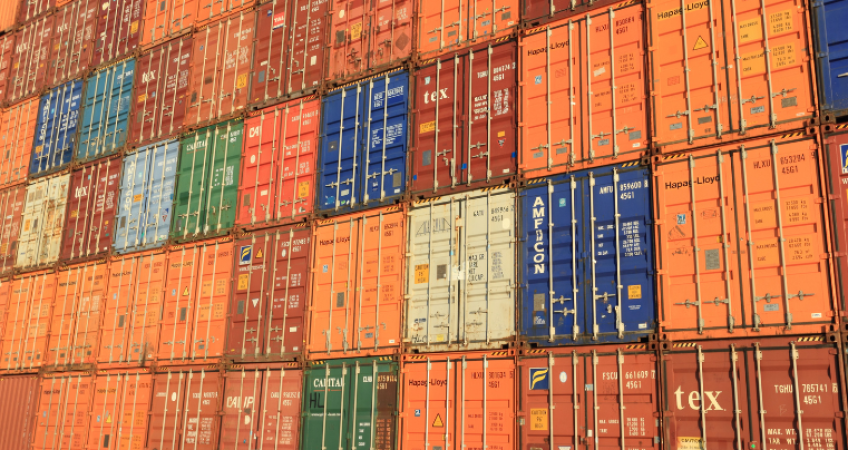
Vietnam reported an August 2023 export turnover amounting to 60.92 billion USD (1.48 quadrillion VND), up by 6.7% from the previous month, thanks to positive trends in merchandise exports. Despite this, one thing that may affect the country’s trading activities is international exchange rates. This impacts imports and exports, which companies, the government, and central banks should be aware of to ensure stable trading operations. Keep reading below to learn about the vital role of exchange rates in Vietnamese and international trade.
Vietnam is among the world’s top exporters. The country cemented its position in the top 20 international trading economies after its export turnover increased nearly eight times between 2007 and 2022, with the former being the year it officially joined the World Trade Organization. At the time, export turnover was only 48 billion USD (1.17 quadrillion VND). More recently, however, Vietnam reported an August 2023 export turnover amounting to 60.92 billion USD (1.48 quadrillion VND), up by 6.7% from the previous month, thanks to positive trends in merchandise exports.
How exchange rates affect Vietnam’s international trade
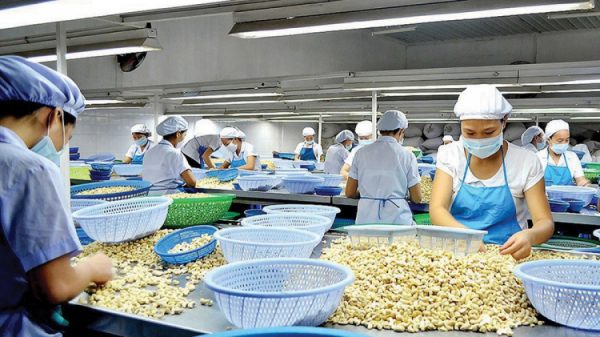
Exchange rates fluctuate because of inflation, interest rates, political conditions, recession, and more. When these factors cause the dong’s value to appreciate, Vietnam’s goods become more expensive. Exports decrease with expenses rising within the country, while imports increase because it will be cheaper to source goods abroad. For instance, the VND appreciated by 2% against the USD in November 2021, with the exchange rate at 22,650 VND per USD due to the State Bank of Vietnam lowering the buying price of the USD. As a result, its import-export turnover reached around 662.9 billion USD (16.1 quadrillion VND) that year.
Conversely, when the VND depreciates, goods become cheaper. Thus, exports will increase as many countries want to source products from Vietnam. Imports will decrease because people have less money to spend on foreign goods. In October 2022, the USD rose sharply against the VND, causing the State Bank to announce a ceiling rate of 24,846 VND for 1 USD to control the exchange rate. This led to the country seeing an import-export turnover of 732.5 billion USD (17.8 quadrillion VND) in 2022, a significant 9.5% increase from the year prior.
Current exchange rate policies implemented by the Vietnamese government
Previously, it was mentioned how the State Bank implemented a ceiling rate to control the USD/VND exchange rate. This is only one of the country’s policies to manage exchange rates that can affect Vietnam’s international trade.
The government and the central bank are responsible for keeping a close eye on exchange rates for this reason. Similar to individuals who participate in giao dịch forex, these institutions must be aware of factors that can affect the exchange rate. For instance, economic news affects margin requirements forex traders must pay. This protects traders against any market volatility after news announcements. In the same vein, Vietnam’s state bank monitors exchange rates to protect the country’s international trades.
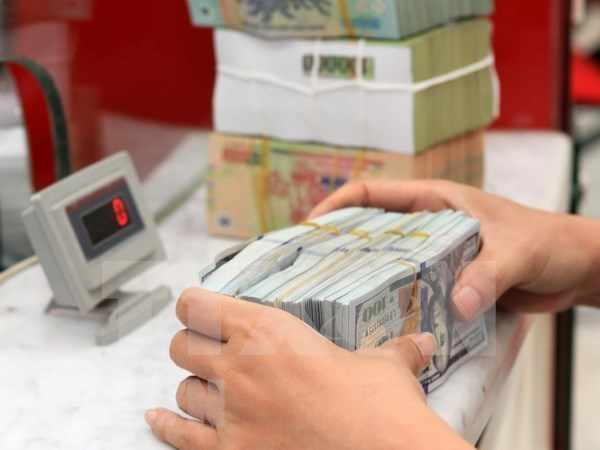
One example is how the government should watch inflation rates in countries where they export and import goods. For example, the US raised interest rates in November 2022 to ease price inflation. This strengthened the USD, and imports became more expensive for Vietnam.
In these cases, the government and state bank implement exchange rate policies to maintain a stable trade. Vietnam has a managed float regime, allowing the state bank to regularly intervene in foreign exchange markets to change the direction of the currency’s float or reduce currency volatility. This is why it introduced a ceiling rate in the previous example above. With such policies, Vietnam can ensure more stable international trade despite fluctuating exchange rates.
Challenges to international trade that Vietnam may face in the future
Despite implementing such policies, Vietnam still faces potential challenges to global trade. One is the ongoing trade war between the US and China that began in 2018, as both countries are among Vietnam’s biggest export markets. For instance, since the US placed tariffs on imported goods from China, China will most likely shift its exports to other countries. This creates competition for Vietnam, as its goods may rival China’s.
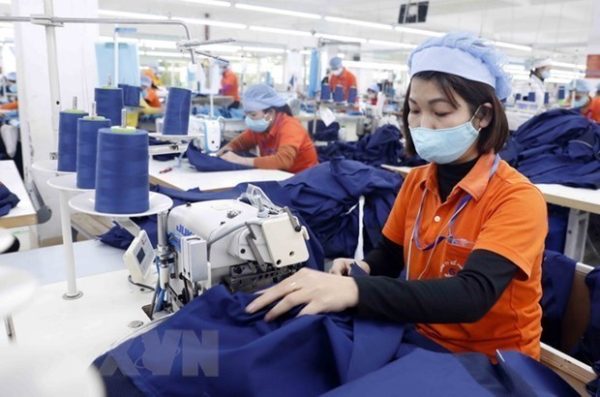
Another challenge is how certain countries introduce trade restrictions on food, animal feed, and fertilizers. Such limits have already affected 56.6 billion USD (1.37 quadrillion VND) worth of products as of October 2022. If Vietnam cannot export to countries with restrictions, it could lower its total trade value.
Exchange rates have a significant impact on Vietnam’s international trading activities. As long as the government, the state bank, and other institutions create policies to manage this, the country can confidently face challenges to trade.
>> Other news:
>> 4 main types of services of Advantage Logistics:
>> Our contact:
-
-
- Address: 3rd Fl., 55 Nguyen Van Giai Str., Dist 1, HCMC, Vietnam.
- Email: nicky@advantage.vn / truc@advantage.vn
- Hotline (cell/ zalo/ viber): 0909.054.866 (Mr.Quyền) / 0938.444.043 (Mr.Trực)
- Web: https://advantage.vn
-


