
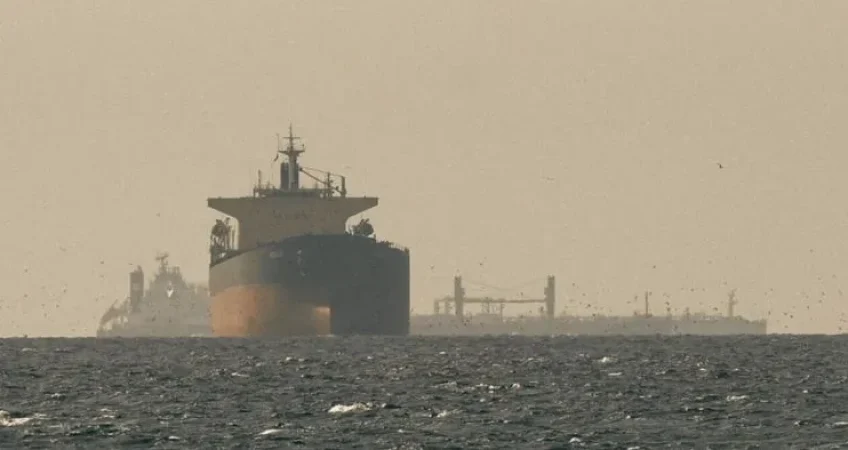
[Advantage Logistics] Maritime traffic through the Strait of Hormuz remains practically restricted. Major container lines continue to avoid routing through the region due to security risks, while supply chains face the threat of new US tariffs and CMA CGM’s strategic move to reroute via the Suez Canal.
Despite media reports of a ceasefire agreement and the US President’s declarations on social media, maritime operations through the Strait of Hormuz have not practically resumed.
Market data indicates that Iran continues to require commercial vessels to obtain military approval prior to transiting the strait. The operational process is further fraught with risks due to inconsistent information regarding whether vessels must pay transit fees, the specific fee amounts, and the methods of payment.
Adding to these existing hazards, Iran has declared that Lebanon falls under the scope of the ceasefire agreement. Consequently, Tehran views Israel’s ongoing military campaigns in Lebanon as evidence that the US and Israel are violating the signed terms.
Container Lines Delay Hormuz Routings
Faced with these security and operational risks, container shipping lines maintain a posture of concern and continue to refuse navigation through the area. Reflecting the industry’s collective caution, Hapag-Lloyd issued an official advisory: “The situation in and around the Strait of Hormuz remains uncertain, and it is not yet clear whether the announced opening will be sustained. The safety of our crews and personnel ashore remains our top priority. Based on our current assessment, we will continue to avoid transiting the Strait of Hormuz for the time being.”
Vessel traffic data clearly reflects this stagnation. Since yesterday, only a single container ship has exited the Strait of Hormuz – the 700-TEU “Lucia,” departing from Iran’s port of Bandar Abbas. The number of liquid bulk and dry bulk carriers passing through the strait is highly limited, and the vast majority of those also originate from domestic Iranian ports.
Tariff Risks and CMA CGM’s Rerouting Moves
In a related development concerning supply chain risks, tariff policies are making a resurgence. President Trump announced on social media that a 50% tariff on goods from countries selling weapons to Iran will take effect immediately.
However, trade law analysts note that, as of now, this regulation has not been issued as an Executive Order, nor has it appeared in the Federal Register or any official legal document. Therefore, this tariff is not practically in effect. Should this rule officially come into force, the flow of imports from China to the US would face a significant impact.
While the Strait of Hormuz remains a security chokepoint, ocean carrier CMA CGM is gradually restoring the frequency of its services routed through the Suez Canal, opting against the diversion around the African continent. The carrier’s current schedule reflects a resumption of regular sailings on the BEX2, MEDEX, and MEX (Asia-Mediterranean services), along with several planned voyages for the EPIC service (from the Indian Subcontinent to Europe).
Source: Phaata.com (According to Global Maritime Hub)
>> Other news:
>> 4 main types of services of Advantage Logistics:
>> Our contact:
-
-
- Address: 3rd Fl., 55 Nguyen Van Giai Str., Tan Dinh Ward, HCMC, Vietnam.
- Email: nicky@advantage.vn / truc@advantage.vn
- Hotline (cell/ zalo/ viber): 0909.054.866 (Mr.Quyền) / 0938.444.043 (Mr.Trực)
- Web: https://advantage.vn
-


